What is the HVAC System in a Cleanroom?
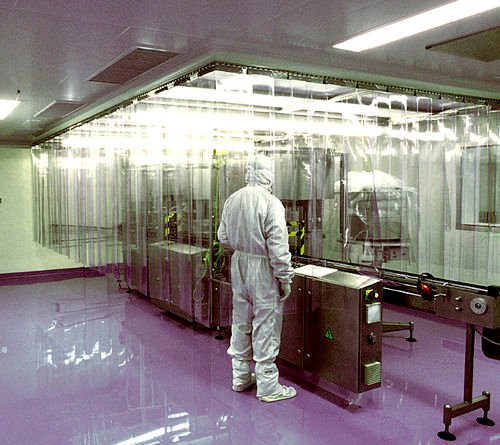
A cleanroom HVAC system is a special air-handling system. It is made to control contamination. This system regulates air cleanliness, airflow, pressure, temperature, and humidity in a specific area.
Unlike comfort HVAC, cleanroom HVAC is process-critical—it directly affects product quality, compliance, and safety.
Core Objectives of Cleanroom HVAC
-
Control airborne particles (dust, microbes)
-
Maintain pressure differentials between rooms
-
Provide uniform, controlled airflow
-
Hold tight temperature & humidity limits
-
Prevent cross-contamination
Key Components of a Cleanroom HVAC System
Air Handling Unit (AHU)
Cleanroom AHUs are engineered for:
-
High air change rates
-
Tight temperature & RH control
-
Multistage filtration (pre-filter → fine filter)
What’s special:
Leak-tight casing, smooth internal surfaces, easy cleaning access.
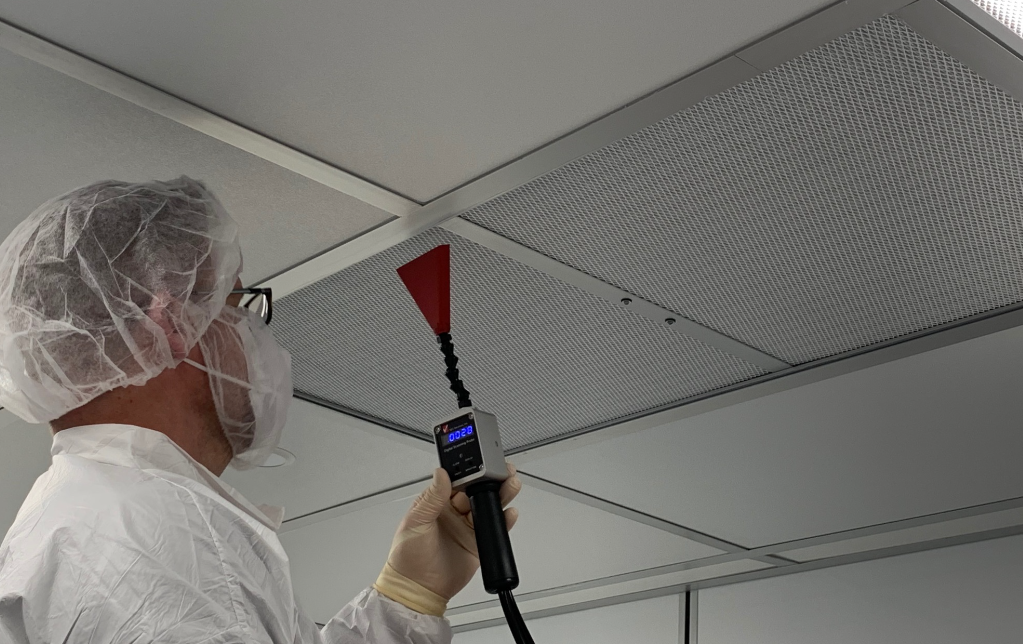
HEPA / ULPA Filtration
-
HEPA: ≥99.97% efficiency at 0.3 µm
-
ULPA (where required): higher efficiency
Installed at:
-
AHU outlet (terminal housings), or
-
Ceiling terminals in critical zones
Purpose: Deliver ultra-clean air directly to the process area.
Airflow Pattern (How Air Moves)
-
Laminar (Unidirectional) Flow
Used in critical zones (e.g., filling lines). Air moves uniformly downward, sweeping particles away. -
Turbulent (Non-unidirectional) Flow
Used in background areas with controlled mixing.
Correct airflow = correct cleanliness.
Pressure Cascade
Cleanrooms use pressure differentials to block contamination.
-
Positive pressure: Cleaner area → dirtier area
-
Negative pressure: For hazardous/potent processes
Typical differential: 5–15 Pa between adjacent rooms.
Temperature & Humidity Control
Common pharma ranges:
-
Temperature: 20–25 °C
-
Relative Humidity: process-specific (often 40–60%)
Why it matters:
Product stability, operator comfort, and electrostatic control.
Air Changes per Hour (ACH)
Cleanrooms use very high air change rates to dilute and remove contaminants.
Typical ranges (indicative):
-
ISO 8 / Grade C: 20–30 ACH
-
ISO 7 / Grade B: 40–60 ACH
-
ISO 5 / Grade A: 200+ ACH (laminar zones)
Cleanroom HVAC vs Comfort HVAC (Quick Comparison)
| Aspect | Comfort HVAC | Cleanroom HVAC |
|---|---|---|
| Purpose | Human comfort | Contamination control |
| Filtration | Basic | HEPA / ULPA |
| Air Changes | Low | Very high |
| Pressure Control | Minimal | Critical |
| Validation | Not required | Mandatory |
Where Cleanroom HVAC Is Used
-
Pharmaceutical manufacturing
-
Biotechnology & laboratories
-
Medical device production
-
Semiconductor & electronics
-
Food & nutraceutical facilities
Why Execution & Commissioning Matter
In cleanrooms:
-
A small air leak can fail validation
-
Poor balancing can break pressure cascade
-
Incorrect HEPA installation can invalidate the room
That’s why cleanroom HVAC systems require:
-
Precise installation
-
Thorough testing
-
Documented commissioning & validation support
In Simple Words
A cleanroom HVAC system is a contamination-control machine—not just an air conditioner.
It creates a clean, stable, and controlled environment where sensitive products can be safely manufactured.Get a Future-Ready HVAC System in a Cleanroom Today
Planning a large commercial or institutional project? Get in touch with Vipul HVAC Solution Pvt Ltd, Gujarat’s trusted HVAC Site Works (SITC) contractor.
📞 Call: +91 8000392000
📧 Email: info@vipulhvacsolution.in
🌐 Visit: www.vipulhvacsolution.inVipul AC – Gujarat’s Expert in HVAC System in a Cleanroom.