
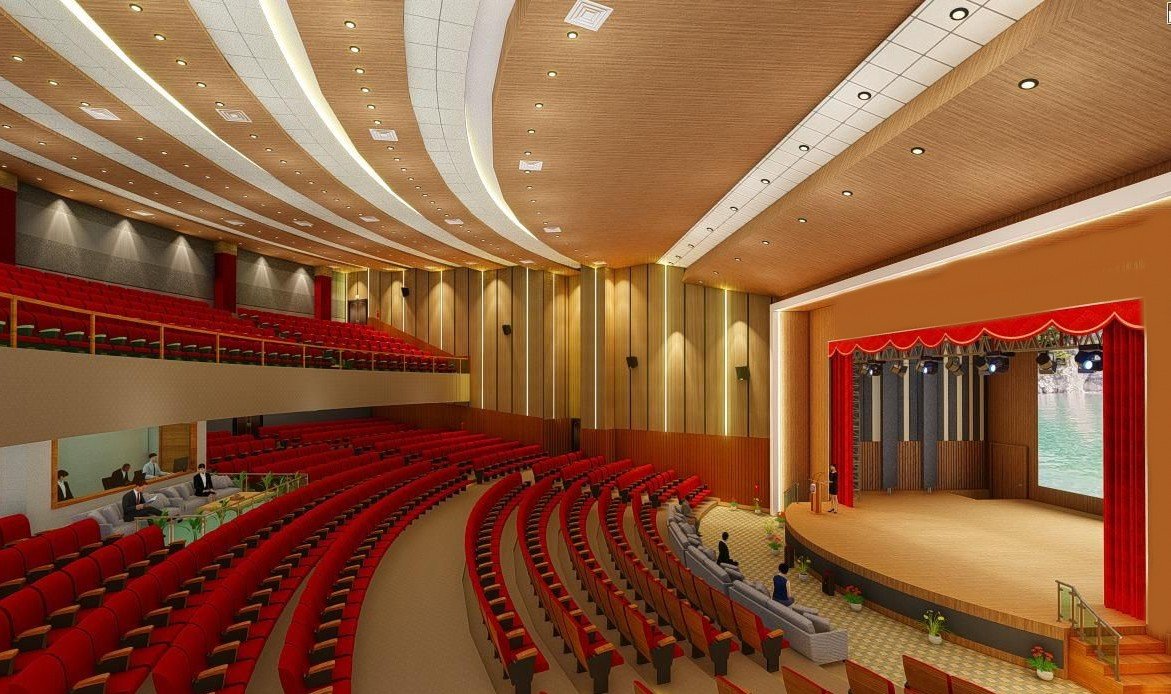
Auditorium HVAC Projects
(Comfort, Acoustics & Performance-Driven HVAC Execution)
Auditoriums, theatres, and performance halls demand a specialized HVAC approach where thermal comfort, acoustics, air quality, and reliability must work together—without distracting the audience or performers.
At Vipul HVAC House, auditorium HVAC projects are executed with a clear focus on silent operation, uniform air distribution, and precise environmental control, aligned with architectural and acoustic design intent.
Why Auditorium HVAC Is Different
Unlike typical commercial spaces, auditoriums involve:
-
High occupant density during events
-
Intermittent but intense load variations
-
Strict noise criteria (NC levels)
-
Large volumes with high ceilings
-
Close coordination with acoustics and interiors
HVAC is a hidden system here—when done right, it is felt but never heard.
Key HVAC Design & Execution Considerations
Air Distribution & Comfort
Auditorium comfort depends on how air enters and leaves the space.
Execution Focus
-
Low-velocity air supply (under-seat, side-wall, or displacement systems)
-
Avoidance of drafts on occupants and stage
-
Uniform temperature across seating zones
Poor diffuser placement can cause hot/cold spots and audience discomfort.
Acoustic Control (Critical)
HVAC noise can ruin performances.
Execution Nuances
-
Low-noise AHUs with acoustic lining
-
Flexible connectors and vibration isolators
-
Silencers/attenuators on supply & return air
-
Proper duct velocities and smooth transitions
Target noise criteria are typically NC 20–25 (or as specified).
Load Variation & Zoning
Auditoriums experience sudden load changes:
-
Full house during shows
-
Partial occupancy during rehearsals
Execution Focus
-
Zoning of seating, stage, balconies, and backstage
-
VFDs on fans and pumps
-
Controls logic tuned for rapid response without noise spikes
Fresh Air & Indoor Air Quality
High occupant density requires:
-
Adequate fresh air rates
-
Effective filtration
-
Quick purge capability between events
Execution Focus
-
Proper fresh air handling and mixing
-
Filter access without disturbing interiors
-
Odor control during peak occupancy
Stage & Backstage HVAC
Performers and equipment have different needs.
Execution Focus
-
Independent HVAC zones for stage, green rooms, control rooms
-
Temperature stability for instruments and AV equipment
-
Quiet operation near microphones and recording gear
Typical HVAC Systems Used
-
Central chilled water systems with AHUs
-
Dedicated AHUs for seating bowl and stage
-
Displacement or under-seat air distribution (where specified)
-
Advanced BMS for scheduling and load control
SITC Scope for Auditorium HVAC
Supply
-
Low-noise AHUs and fans
-
Acoustic ducting accessories
-
Controls and sensors as per consultant specs
Installation
-
Precision duct routing with acoustic treatment
-
Vibration isolation and flexible connections
-
Coordination with interiors, lighting, and acoustics
Testing
-
Airflow balancing at design velocities
-
Noise and vibration checks
-
Functional testing of zones and controls
Commissioning
-
Performance testing during simulated occupancy
-
Temperature uniformity validation
-
Fine-tuning for noise and comfort
-
Joint sign-off with consultant and PMC
Common Execution Challenges (and How to Avoid Them)
- High air velocity causing noise
- HVAC clashes with acoustic panels
- Inadequate zoning for stage vs seating
- Poor access for maintenance after interiors
Early coordination + mock-ups + phased commissioning prevent these issues.
Applications
-
Cultural auditoriums & performance halls
-
Multiplex theatres
-
Convention centers
-
University lecture halls
-
Corporate town halls
Conclusion
Auditorium HVAC projects demand engineering sensitivity as much as technical skill. The system must deliver comfort silently, adapt to changing loads, and respect the acoustic character of the space.
At Vipul HVAC House, auditorium HVAC execution follows one guiding principle:
Comfort without noise.
Performance without distraction.
Engineering that stays invisible.
📝 Fill Out the Form – Get a Quote Within 24 Hours
1 thought on “Auditorium HVAC Projects”