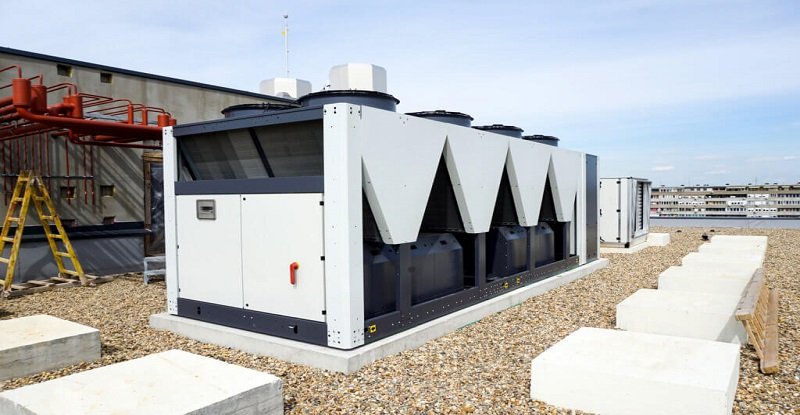
Variable Refrigerant Flow (VRF) systems are advanced HVAC systems that allow for precise temperature control and energy efficiency by varying the flow of refrigerant to different indoor units. The compressor is a critical component in VRF systems, as it directly influences the system’s efficiency, performance, and reliability. Here’s a detailed explanation of the types of compressors used in VRF systems:
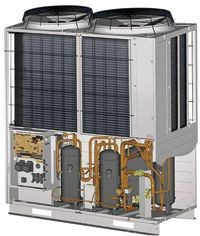
1. Inverter-Driven Scroll Compressors
- Mechanism:
- Scroll compressors use two interleaved scrolls to compress refrigerant. One scroll is stationary while the other orbits around it, compressing the refrigerant into increasingly smaller pockets.
- Inverter technology allows the compressor to adjust its speed based on the cooling or heating demand. This means the compressor can operate at variable speeds rather than just on/off, improving efficiency and comfort.
- Usage: Most common in VRF systems.
- Details:
- Efficiency: Inverter-driven scroll compressors are highly efficient because they can modulate their output to match the exact load requirements. This reduces energy consumption, especially during partial-load conditions.
- Reliability: Scroll compressors have fewer moving parts than other types of compressors, which contributes to their durability and reliability. They are less prone to mechanical failure and offer smooth and quiet operation.
- Applications: Due to their efficiency and reliability, scroll compressors are widely used in VRF systems, particularly in residential and commercial applications where energy efficiency and quiet operation are essential.
2. Inverter-Driven Rotary Compressors
- Mechanism:
- Rotary compressors have a rotating mechanism inside a cylinder, typically consisting of a roller that rotates within a cylinder. The rotating motion compresses the refrigerant.
- Like scroll compressors, rotary compressors in VRF systems are often inverter-driven, allowing for variable-speed operation.
- Usage: Used in smaller capacity VRF systems or systems designed for specific applications.
- Details:
- Efficiency: Rotary compressors are efficient and can also modulate their output, but they are generally less efficient than scroll compressors. However, they perform well in systems with lower capacity requirements.
- Size and Cost: Rotary compressors are typically smaller and less expensive to manufacture, making them a good choice for compact and cost-sensitive VRF systems.
- Applications: They are often used in smaller VRF systems, particularly in residential settings or light commercial applications.
3. Inverter-Driven Screw Compressors
- Mechanism:
- Screw compressors use two helical screws (rotors) that rotate in opposite directions. As the screws rotate, refrigerant is compressed in the space between them.
- When equipped with inverter technology, screw compressors can modulate their speed to match the cooling or heating demand, similar to scroll and rotary compressors.
- Usage: Typically used in large-capacity VRF systems.
- Details:
- Efficiency: Screw compressors are highly efficient, particularly in large systems that require continuous operation. They offer good efficiency across a wide range of operating conditions.
- Capacity: Screw compressors can handle much larger refrigerant volumes than scroll or rotary compressors, making them suitable for large-scale VRF systems in commercial or industrial settings.
- Applications: Commonly used in high-capacity VRF systems for large buildings or industrial applications where large-scale cooling and heating are required.
4. Inverter-Driven Centrifugal Compressors
- Mechanism:
- Centrifugal compressors use the centrifugal force generated by a rotating impeller to compress refrigerant. The refrigerant is drawn into the center of the impeller and then flung outward by centrifugal force, compressing it in the process.
- Inverter technology allows these compressors to operate at varying speeds, improving efficiency and reducing energy consumption.
- Usage: Typically used in very large VRF systems or specialized applications.
- Details:
- Efficiency: Centrifugal compressors are extremely efficient, particularly in large-scale systems. They are designed to operate continuously and handle large volumes of refrigerant.
- Capacity: These compressors are capable of managing the highest capacities among the types discussed, making them suitable for very large buildings or facilities with substantial cooling and heating needs.
- Applications: Often used in very large commercial buildings, industrial applications, or where high-capacity cooling is required.
Summary
- Scroll Compressors: Most common in VRF systems due to their high efficiency, reliability, and suitability for variable-speed operation.
- Rotary Compressors: Used in smaller VRF systems or systems where cost and compact size are critical considerations.
- Screw Compressors: Used in large-capacity VRF systems, especially in commercial or industrial settings.
- Centrifugal Compressors: Reserved for very large-scale VRF systems or specialized applications requiring the highest capacity and efficiency.
The choice of compressor in a VRF system depends on the specific application, capacity requirements, and efficiency goals. Inverter technology is a common feature across all these compressors, enabling VRF systems to provide precise temperature control and significant energy savings.
Looking to install a commercial HVAC System or Duct work in your Business Area?
Contact Vipul Ac to learn about our HVAC Service
Call +91 9825636606 Today.